
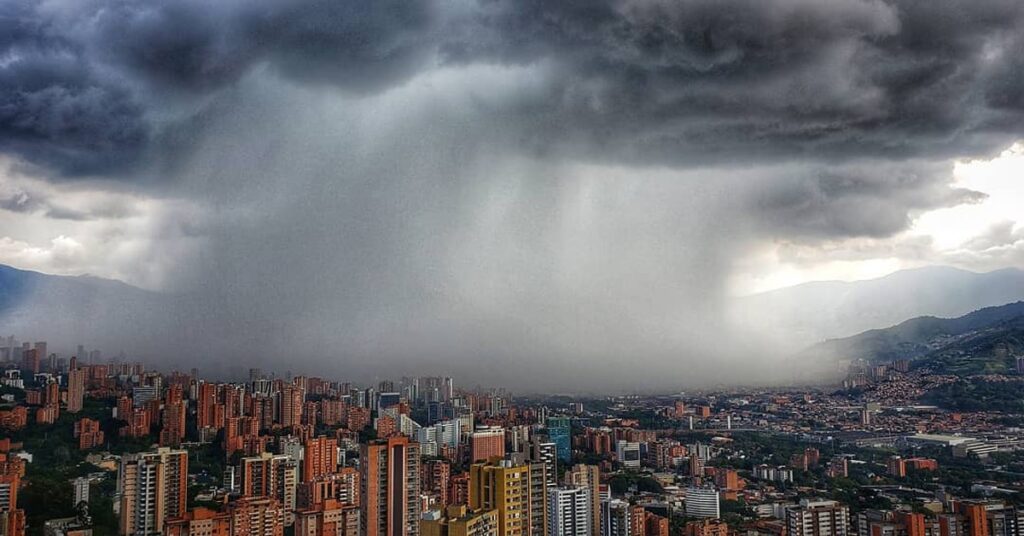
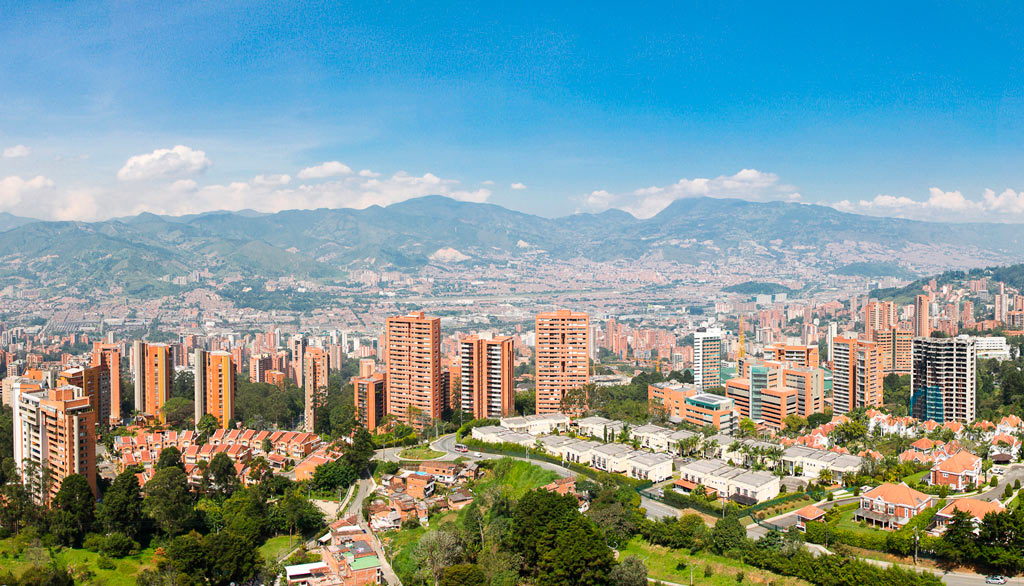
“City of Eternal Spring” is one of the more accurate nicknames a city has ever earned — the temperature genuinely barely moves across the year, sitting somewhere between 15°C and 28°C (60–82°F) whether you land in January or July. So if temperature isn’t really the variable, what actually changes season to season? Rain, crowds, and which festival happens to be running while you’re there.
The Two Dry Seasons
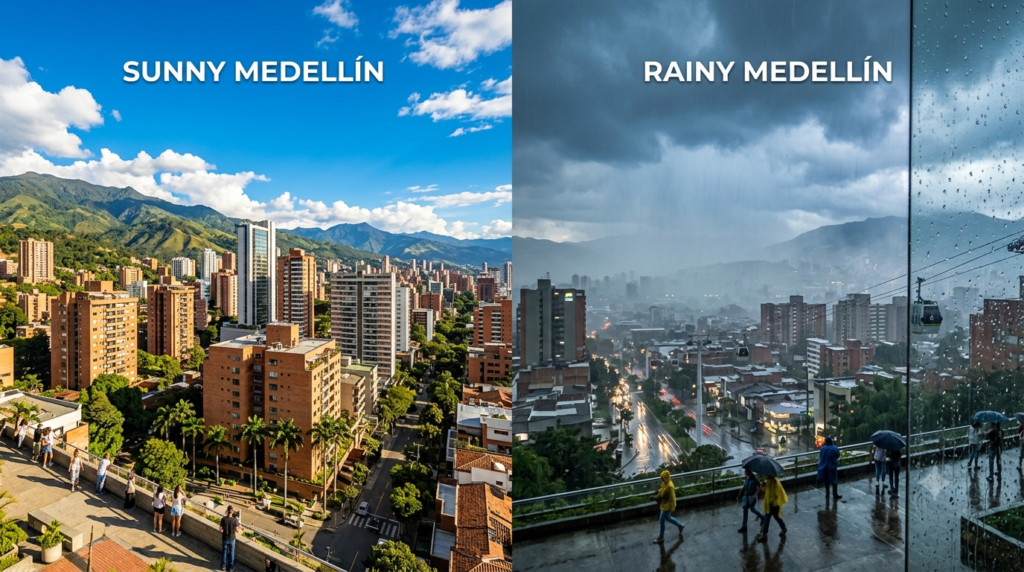
Medellín’s weather follows a bimodal pattern — two drier stretches, two wetter ones — rather than a single summer/winter split.
December through February is the more reliably dry window, with the added bonus of the city’s Christmas lights display (Alumbrados) and New Year energy carrying through much of December. It’s also, unsurprisingly, one of the more crowded and expensive periods to visit, since a lot of the world has the same idea.

June through August is the second dry stretch — and if your travel dates have any flexibility at all, this is the one worth building a trip around, because it overlaps directly with Feria de las Flores in late July and early August. Clear skies and the city’s biggest cultural event, in the same window.
The Two Rainy Seasons
April–May and September–November are Medellín’s wetter stretches, with October typically the wettest month of the year. Before you cross these off entirely, it’s worth knowing what “rainy season” actually looks like here: it’s rarely an all-day washout. Showers tend to build in the afternoon and last somewhere between thirty minutes and two hours, with mornings usually staying clear.
That pattern matters practically: if you’re visiting during these months and have a day trip planned — Guatapé, Parque Arví, Comuna 13 — leave early. Mornings are consistently your best weather window; afternoons are when the sky tends to turn.
The upside of traveling in these shoulder months is real: fewer crowds, more negotiable accommodation rates, and an easier time getting into restaurants and experiences that book out during peak season.
So, When Should You Actually Go?
- Want Feria de las Flores? Late July into early August — dry season and the festival overlap almost perfectly.
- Want the Christmas lights and New Year atmosphere? December, accepting that it’s also peak crowds and pricing.
- Want the most reliably dry weather with the fewest crowds? January and February, once the December holiday surge has passed.
- Don’t mind an afternoon shower in exchange for better prices and fewer people? April–May or September, planning outdoor activities for the mornings.
- Want to avoid rain almost entirely, no matter what? Skip October specifically — it’s the one month that consistently earns its reputation.
The Bottom Line
There’s genuinely no bad time to visit Medellín — the “eternal spring” reputation holds up regardless of month. The real planning question isn’t hot versus cold, it’s what you want more: a specific festival, lower prices and thinner crowds, or the highest odds of a completely dry week. Once you know which of those matters most to you, the calendar mostly picks itself.
Not sure which season fits your trip? Tell us what matters most to you, and we’ll help you pick the right window — and build the itinerary around it. Schedule a planning call →